Survey of Ephesians
Chapter # 1 2 3 4 5 6
Section Letter A B
What? (Context, i.e. What,Where,When,Why)
So What?
Now What?
General Comments (Personal Note)
Devotions
Opus xx. Words June 14, 2022
My mother told me repeatedly that “sticks and stones can break my bones, but words can never hurt me.” She was always encouraging me regarding my physical strength and size. I was a big kid for my age. But we know that words can indeed hurt. Used for the wrong reason, words can cause a love relationship to fail, a business to close, and a war to start. Words are important, powerful, and life-changing. We should pay close attention to the words we use every moment, every day, I pray.
We who practice our faith as Methodists understand the importance of words. John Wesley, one of our founders, wrote many words in “teaching sermons” (Oden, 1994), Biblical commentary on the Old and the New Testament, hymns, letters, and poem He understood the importance of words, exceptionally written words. He said that “I am a man of one book” (Wesleyana, 1840, pg. 39). That book was the Bible. Written words have dignity, power, and purpose long after printing.
Jude writes using a few words but most profound words concerning our human dignity, most specifically our sexuality. You may ask, why? Because for the early church, the concept of Holiness, our Holiness was paramount. Rabbinical teaching began at the first of the Jewish new year, every new year, with two essential topics. The Covenant Code and the Holiness Code. (Muilenberg, The Way of Israel, pgs 21-22) Genesis, creation and obedience, and Leviticus, holiness in chapters 17-26, were the books used to remind Israel of the Covenant with G-D Jesus, the pioneer and perfecter of our faith, taught us to be holy as our Father in Heaven is Holy. “You, therefore, must be perfect, as your heavenly Father is perfect.” (Matt 5:43, NIV)
For us, Jude gives us his words. A small, one-chapter book filled with truth. “Beloved, being very eager to write to you of our common salvation, I found it necessary to write appealing to you to contend for the faith…” (Jude v3, NIV) Especially the word used as a verb, epagonizomai (G1864) (ep-ag-o-nid-zom-ahee) or to contend. It is used one time in this text only in the entire Greek New Testament. Furthermore, it means to “earnestly contend for.” In other words, we are struggling for the truth because often, the truth evades us.
In the context of Jude, we are to struggle with identifying truth from fiction. Jude warns that “For certain individuals whose condemnation was written about long ago have secretly slipped in among you. They are ungodly people who pervert the grace of our God into a license for immorality and deny Jesus Christ, our only Sovereign, and Lord.” (Jude, v4, NIV)
In closing, I encourage you, the reader, to reflect on the words you used today. Spend some time with some Holy Words. Perhaps a short read of Jude is a way to begin. And above all, pray.
Cleve is retired with his wife in Tampa, Fl. He holds a MThS from Drew Theological School
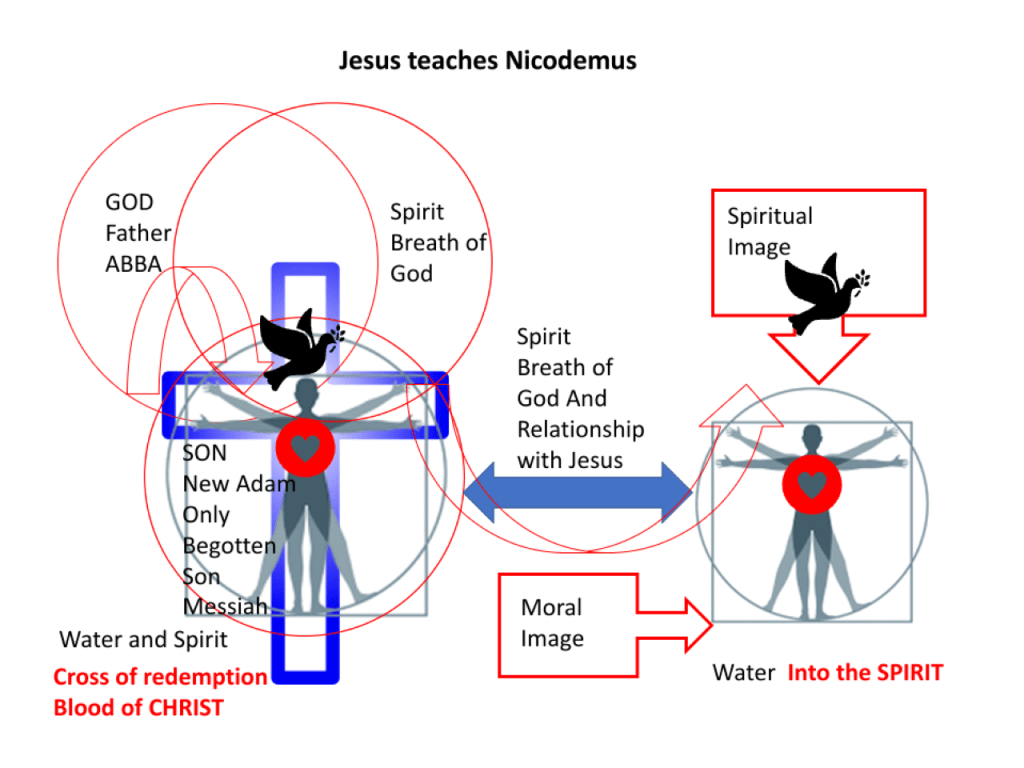
Schematic Theology
An Open Letter to Methodists
An open letter to all who practice their Christian Faith as Methodists
Thursday, April 29, 2021 Dear friends,
I am writing to you because we find ourselves at a great divide that runs very deep, more profound than we realize.
I am of an age to remember vividly the arguments surrounding our current divide. We have been arguing over inclusion and ordination that is not in alignment with Biblical teaching for over fifty years.
How long do you expect those who align our faith with a grace that convicts to continue the argument? Frankly, two years ago was the straw that broke the camel’s back. The vote was not recognized by those who insist on a non-traditional biblical lifestyle. In fact, your voice drowned out our voice for reconciliation. Over two years, we have negotiated with good faith for a mutually agreeable way forward. Voted on by the joint members of both corners. Yet here we are still not reconciled in our parting. We have no way forward or backward. Simply speaking, we who call ourselves Methodist are the laughingstock of the secular world audience.
Where do I see us now? We both have lost our first Love! You are puzzled by my statement, expertly understood, but none the less we are not in LOVE with our first Love.
We are Biblical people regardless of the translation; our first Love is to God. Either /or how you react to this letter is your decision, but we must decide, including the Bishops.
Simply, the argument has moved our full attention from God to Denomination. We are to be celebrating the Love from the Father, the Son, and the Spirit.
Jesus says it best. 20 “My prayer is not for them alone. I pray also for those who will believe in me through their message, 21 that all of them may be one, Father, just as you are in me and I am in you. May they also be in us so that the world may believe that you have sent me. 22 I have given them the glory that you gave me, that they may be one as we are one— 23 I in them and you in me—so that they may be brought to complete unity. Then the world will know that you sent me and have loved them even as you have loved me.” (John 17, NIV)
“In your relationships with one another, have the same mindset as Christ Jesus:” (Phil 2:5) So let us begin by lifting our eyes toward heaven and choose the let our hearts follow.
With a love that hurts, Sincerely
Cleve Rev. 2:4
A Closer Look at Wesley’s Quadrilateral
Opus XX A closer look at Wesley’s Quadrilateral April 24, 2023
Since originally proposed by Colin Williams and further developed by Albert Outler, John Wesley’s Quadrilateral has been praised and ridiculed relentlessly. Most recently, the argument is that the “Quad” should be done away with altogether. In this short paper, I will attempt to convince Methodists need to use the quad as Wesley used the structure of Text, Tradition, Experience, and finally, Reason for biblical studies and “theological deliberations”.
We have had enough of liberal theology and inerrant biblical interpretations to the point of launching a new beginning. Perhaps it is the Third Great Awakening. History will decide the outcome. Ours is to be faithful to the word of God. In doing so, we need a structure to guide our studies.
However, we should look at a reordering of the Quad. May I suggest looking at the Asbury Revival as a starting point. It was obvious to any observer of the events that the congregation responded to the Word of God plainly delivered. The students heard the call and responded with the extended experience over several weeks, even months.
This is my first recommendation: Scripture first and foremost, followed by experience. We preach salvation by grace through faith. (Eph 2:8) grace (charis, G5485) is used 120 times in the NIV and 18 times in Romans alone. Peter’s sermon on the day of Pentecost resulted in three thousand being filled with the Holy Spirit and Baptised into the Way. These new to the faith need encouragement and admonishment, which was offered by the disciples. The first teaching, The Didache, begins with there two ways forward. Life or Death each are en experience.
The second recommendation is tradition, followed by Reason. We who follow the vast cloud of witnesses before us have the advantage of their struggles and victories. If we simply narrow our Tradition to the Church Fathers such as Athanasius, Greogry of Nazianzus, Basil the Great, and John Chrysomstom from the East we would be well informed but not completely informed. That is because we have the Four Fathers from the West, including Ambrose, Jerome, Agustine, and Gregory the Great.
Bible moths have the insight of John and Charles Wesley to understand reason. For John, it is “…I hold divine testimony to be the most reasonable of all evidence whatever. Faith must necessarily at lenght be resolved into reason.”
In closing, I leave you with John Wesley’s argument; “God is true; therefore what he says is true. He hath said this; therefore, this is true.”
Cleve is retired with his wife in Tampa, Fl. He holds an MThS from Drew Theological School
Traveling to see the Christian World
For many years, we have been traveling the world seeking the most significant Christian sites. These photos are from those trips. Blessings
Athens 2018
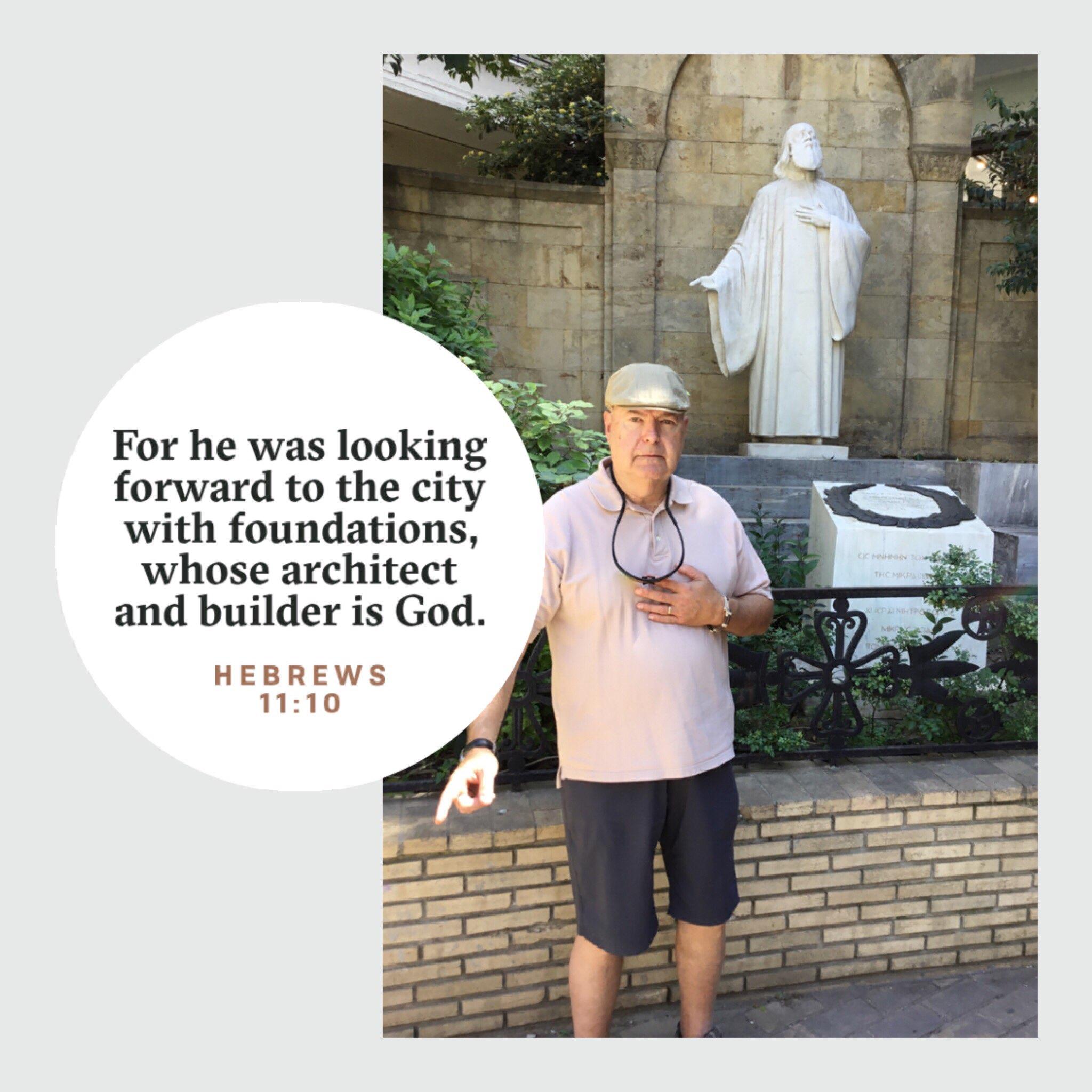
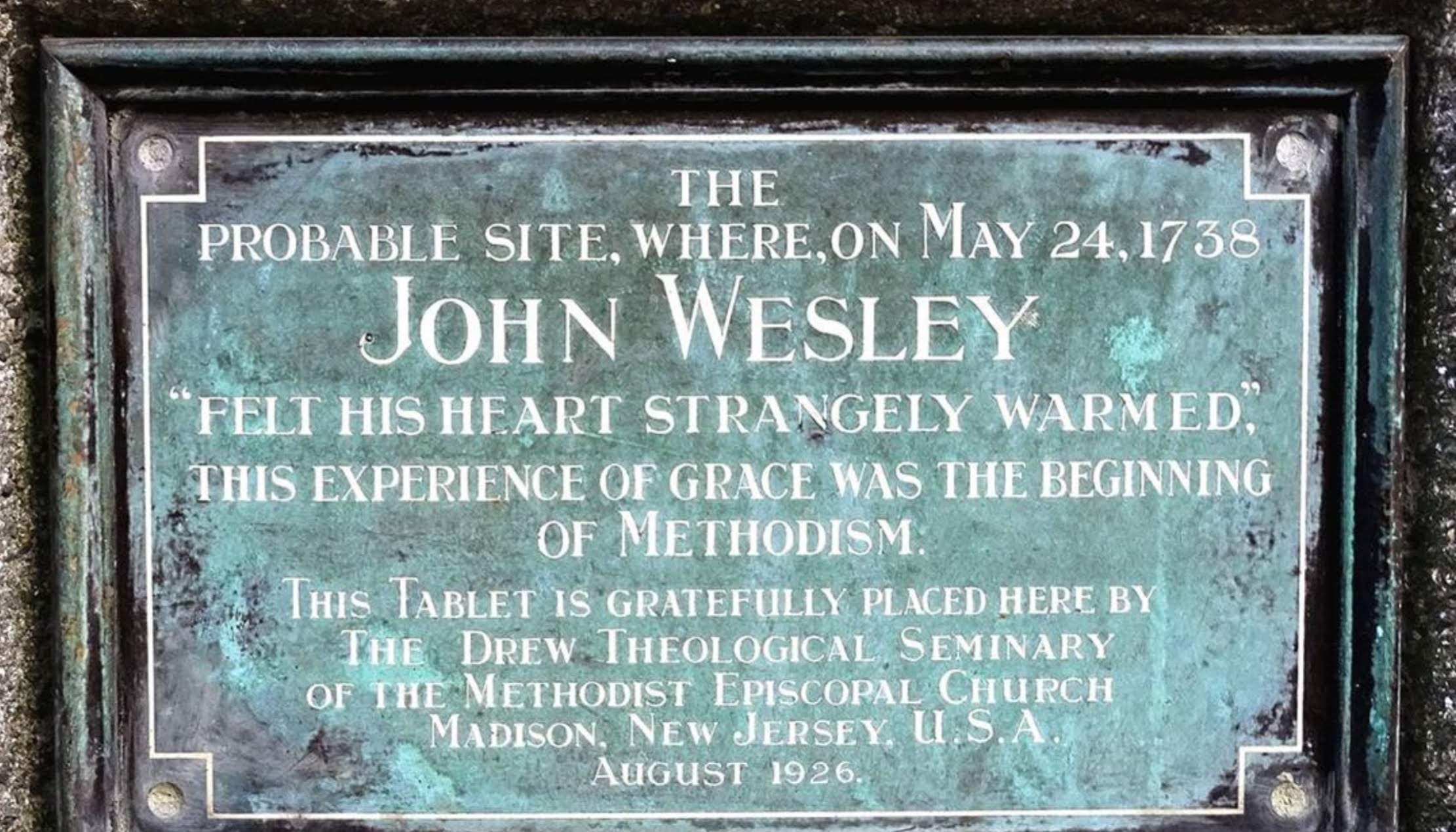
Has your heart been strangly warmed?
 Come and see! The table is set for you and for me.